

Recognizing symptoms, where do the causes of pressure ulcers come from
Causes of pressure ulcers: pressure ulcers will usually occur in patients with limited mobility, elderly people who are bedridden. When the condition of the ulcer is not handled properly, it can lead to many dangerous complications. The article below will let you know the causes, symptoms, and ways to treat pressure ulcers effectively.
Causes of pressure ulcers

The main cause of pressure ulcers is that the patient lies for a long time, the body cannot move on its own
Pressure ulcers are formed by changes in the skin and subcutaneous tissues due to pressure on bony prominences. According to statistics, > 90% of pressure ulcers occur at bony prominences in the lower part of the body. Subjects prone to pressure ulcers are usually elderly people with limited mobility and difficulty changing lying/sitting positions on their own.
Prolonged pressure causes tissues and structures at that location to lack nutrition. In that case, ulceration will occur if the following risk factors appear
- Shear force
Causes of pressure ulcers: shear force occurs when the patient changes position from lying to sitting for a long period of time. This sliding will cause pressure on the capillaries under the skin, which over time will cause that area of skin to lack nutrients.
- Friction force
Causes of pressure ulcers: friction force will appear when surfaces move back and forth against each other. As when the patient slides on the bed, friction will cause rubbing and damage the skin surface. Once the epidermis is damaged, it will be a favorable condition for harmful factors such as bacteria to have the conditions to attack.
- Moisture
Skin that is frequently damp is also one of the causes of pressure ulcers. When the patient is incontinent of urine/feces, cleaning is not timely, sweating a lot, or due to hot weather, it can cause the skin to be damp.
- Nutritional deficiency
Causes of pressure ulcers: when a patient has pressure ulcers, the area of skin under pressure has been lacking nutrients for a long time. If the supplementary nutritional regimen does not provide enough necessary protein and vitamins, the ulceration process will occur earlier than normal.
Symptoms of pressure ulcers

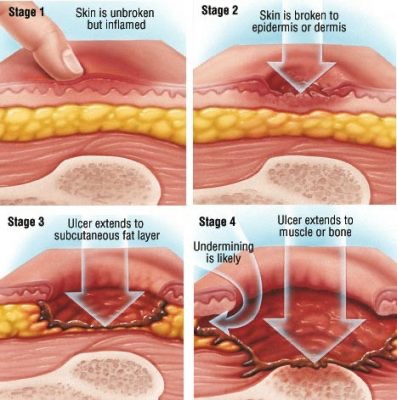
Pressure ulcers have 4 stages of ulceration
Most pressure ulcers will not be too difficult to diagnose. In areas under direct pressure from the surface of objects such as beds, chairs pressure ulcers usually occur
In the early stages, pressure ulcers will have some of the following symptoms:
- The area of skin under pressure will change color; for people with light skin, the damaged skin area is light pink. For people with dark skin, the skin area will be blue/purple.
- When pressing on the damaged skin area, it will not turn white.
- The patient will feel pain or itching in the area of skin under pressure.
When pressure ulcers are in late stages, there will be some of the following symptoms:
- The ulcerated skin area has blisters and additional open lesions (Stage 2 ulcer).
- The lesion has spread to the fat layer under the skin (Stage 3 ulcer).
- The lesion eats deep into the tendons, muscles, and bones (Stage 4 ulcer).
Common locations for pressure ulcers
For patients who frequently use wheelchairs, pressure ulcers will very easily appear in the following locations:
- Buttocks/tailbone
- Spine/shoulder blades
- Arms and legs, the parts that rest against the chair
For bedridden patients who are immobile, pressure ulcers are commonly found in skin areas such as:
- The back of the head (if the patient is lying on their back) or both sides of the head (if the patient is lying on their side)
- Both shoulder blades
- The sacrum and coccyx, the lower back (if the patient is lying on their back) or both hips (if the patient is lying on their side)
- The heels, the skin area behind the knees, and the ankles
Caregivers/family members should note to regularly check these skin areas to detect ulcers early. When signs of an ulcer forming are seen, measures must be immediately applied to help reduce pressure and support the skin to quickly return to normal.
Causes of pressure ulcers - Complications

The causes of pressure ulcers not being supported early can lead to many dangerous complications
When suffering from pressure ulcers, it not only causes local pain but can also lead to many serious complications. These complications will have the risk of directly threatening the patient's health and life, such as:
- Cellulitis: This is an infection that occurs in the skin tissues and soft tissues connected to each other. Cellulitis causes heat-redness-swelling in the damaged skin area. When inflammation occurs, it will affect nerve tissues, and the patient no longer feels pain. However, this is not a good sign but is warning that the infection is becoming worse.
- Infection of bones and joints: Bacteria on the ulcer can penetrate deeper into the joints and bones. Joint infection can damage cartilage and cartilage tissue. When bone infection (osteomyelitis) occurs, it can cause the function of joints and limbs (legs, arms) to decline.
- Cancer: Chronic ulcers that do not heal for a long time will have the risk of developing into a type of cancer called squamous cell carcinoma, which seriously affects the patient's health.
- Sepsis: This condition is very rare, only appearing when bacteria from the ulcer enter the general circulation via the blood.
https://www.youtube.com/watch?v=wcWI8e3GZBQ&list=WL&index=11
-ST-